

26 years of advocating for accountable policies in times of uncertainty
Years in which democratic processes advance without pressure are rare. More often, progress takes place in conditions of uncertainty, limited resources, and shifting priorities, and it is precisely in such periods that the meaning of continuity and consistency in the name of the public interest becomes clear.
The past period was marked by significant political and institutional challenges, as well as by substantial changes in the civil society ecosystem. Changes in donor priorities, reduced availability of financial support, and increased operational uncertainty affected organizations working across various fields – from democracy and European integration, public policymaking and good governance, to social, educational, and development initiatives.
In this context, the Institute for Democracy continued to carry out its mission with a clear focus on creating sustainable mechanisms that can withstand current political, institutional, and societal fluctuations. In 2025, IDSCS was also recognized at the global level. Our work was further validated through inclusion in the 100 Think Tanks to Watch 2025 list, organized by the On Think Tanks platform. This recognition, based on nominations by other research organizations and experts, highlights our organization as an institution whose work has a significant impact and is worth following within the international policy and analysis community.
In a year that proved to be one of the most challenging for the civil society sector, and in which we marked 26 years of existence, the Institute’s work was grounded in accumulated experience, analytical expertise, and the development of mechanisms that ensure continuity rather than short-term effects. Our mission continued to be realized through experience, knowledge, and established partnerships, as well as through the awareness that trust is sustained only through results. We remained committed to a research-based approach, strategic cooperation with diverse stakeholders, and open communication with the public.
In this spirit, the three program centers – the Center for Good Governance, the Center for European Integration, and the Center for Parliamentary Support and Democratization – worked to advance public policies, strengthen democratic processes, and build mechanisms for accountability and transparency.
The results presented below are not merely a collection of activities, but rather reflect an approach that places the public interest at the center of the creation and implementation of public policies and democratic processes.
Accountability in the European integration process
After two years of systematic monitoring of the commitments and obligations arising from the Berlin Process, the Center for European Integration initiated the establishment of a cross-party parliamentary group to monitor the implementation of the Berlin Process and the Reform Agenda. The initiative was launched at the event “The Progress of North Macedonia in the Berlin Process,” held in September 2024, and was formally established in March 2025.
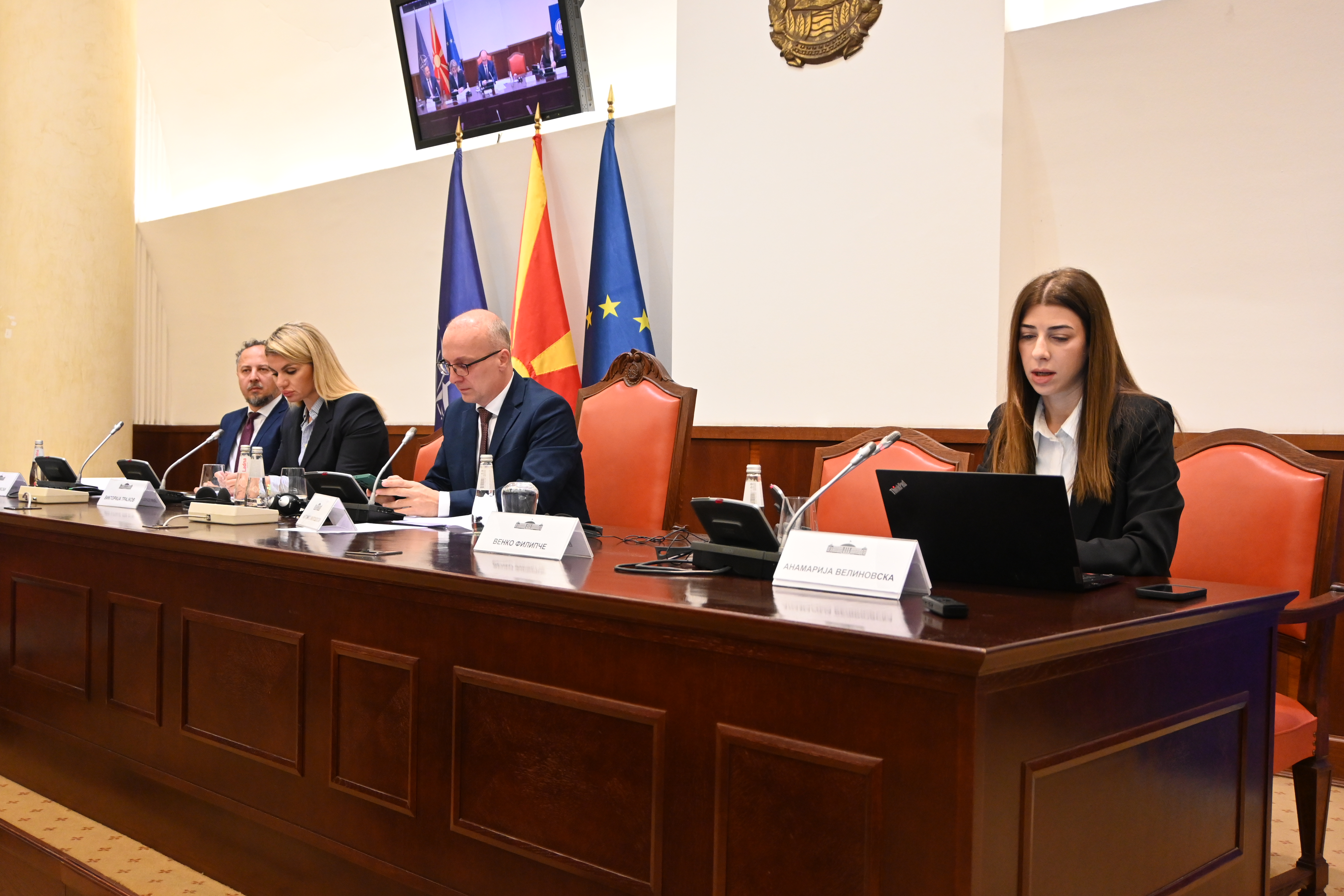
Through this achievement, the Center laid the foundation for an institutionalized parliamentary mechanism that ensures continuity, political dialogue, and increased transparency in the implementation of reforms related to European integration.
Intending to strengthen institutional capacities for European integration, the Institute for Democracy and the Ministry of European Affairs (MEA) signed a Memorandum of Cooperation, marking the beginning of a new chapter of strategic partnership. The cooperation focuses on enhancing the Ministry’s capacities in the EU integration process through support in public policy and legislative development, provision of expert assistance, as well as communication and public education on the benefits of reforms related to EU membership.

As a direct result of an expert workshop on drafting a legislative proposal, organized with the support and expertise of the Center for European Integration, the relevant legislative text has already been prepared and is currently in the draft phase. Its submission to a government session is expected, representing a significant step toward alignment with European regulations and ensuring a safe investment environment in the country.
Finally, the Center for European Integration published the tenth edition of the public opinion analysis on North Macedonia’s accession to the European Union. This study represents one of the rare longitudinal surveys in the country and the region that continuously measures citizens’ perceptions of European integration, trust in the process, and support for EU membership, providing an invaluable basis for evidence-based policymaking and understanding real societal trends.
Fighting corruption through a systemic approach
Despite the challenges brought by unstable and reduced funding for civil society organizations in 2025, the Center for Good Governance continued to work diligently on advancing anti-corruption knowledge among future generations of politicians and encouraging civic engagement to improve democratic life.
Throughout the year, nearly 2,000 citizens submitted complaints to competent institutions through the “React” platform, related to environmental and public interest issues, including the initiatives and calls of civic activists and organizations working to protect the Došnica River. This activity reaffirmed the platform’s role as a significant mechanism for direct citizen participation in accountability processes.

Through the project “Encouraging Debate on Accountability and Anti-Corruption,” supported by the National Endowment for Democracy, the Center promoted anti-corruption and integrity in the context of local self-government, ahead of the 2025 local elections. An overview of key anti-corruption commitments of civil society was prepared and presented to election candidates, aiming to improve the pre-election anti-corruption agenda. Additionally, 34 members of youth wings of political parties, some of whom were election candidates, were trained on combating corruption at the local level.

In October, the Center contributed to the regional exchange of experience by organizing an event that brought together high-level representatives of public prosecution offices for organized crime and corruption from the Western Balkans, Croatia, and Slovenia. The event, organized in cooperation with the Basic Public Prosecutor’s Office for Organized Crime and Corruption and supported by the French Embassy in Skopje, enabled the exchange of good practices among regional prosecution offices, Eurojust, and representatives of French institutions.
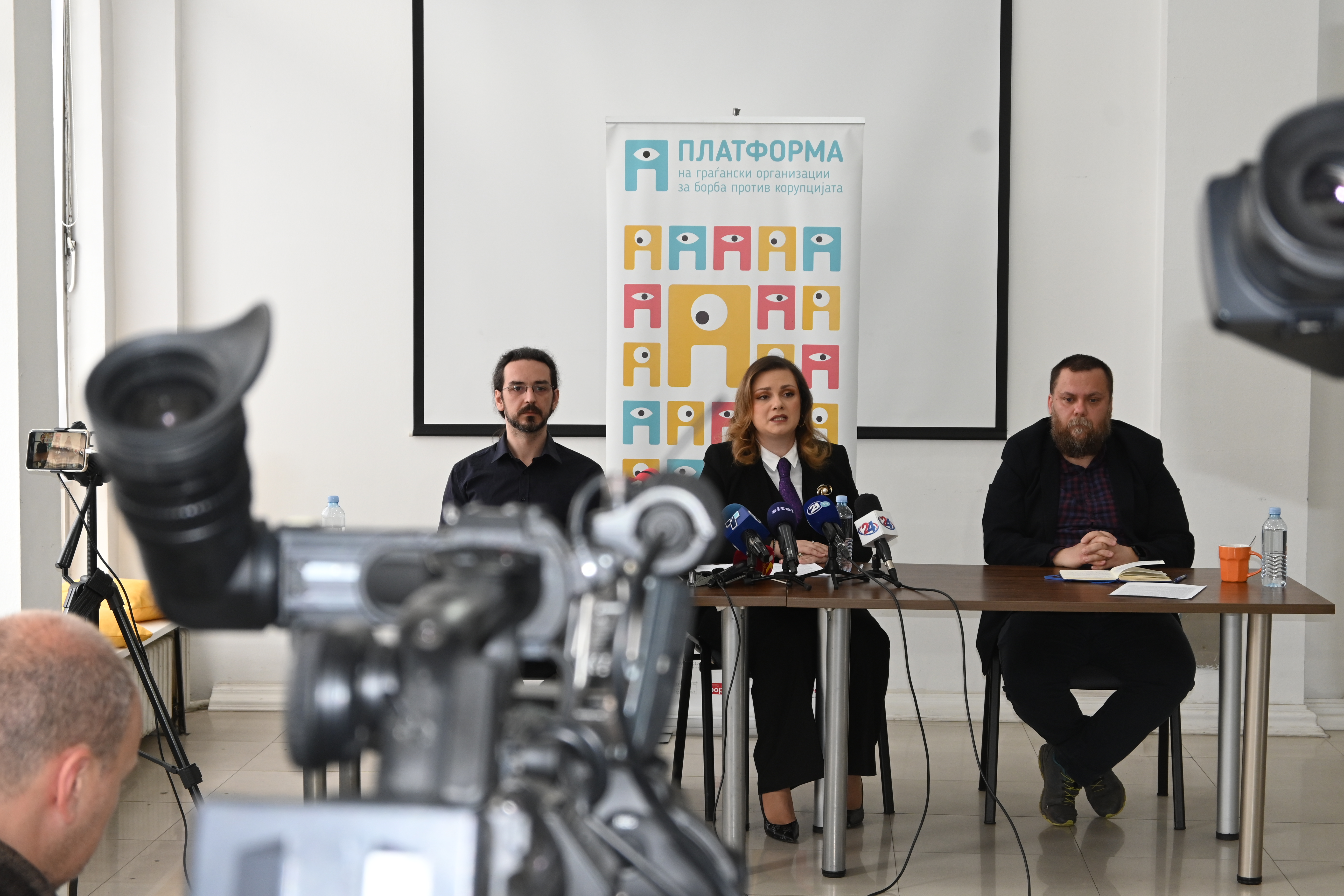
Within the Platform of Civil Society Organizations for the Fight Against Corruption, the team contributed to improving the structure of the new National Anti-Corruption Strategy. Platform organizations worked to support the State Commission for the Prevention of Corruption by focusing the new strategy on priority areas and participating in the collaborative process of defining the tasks, objectives, and activities of the strategy.
However, 2025 cannot pass without reflecting on the tragedy in Kocani. It served as yet another reminder that corruption is not only about illegal enrichment or tolerance of rule-breaking. On the contrary, enrichment means someone else’s impoverishment, and tolerance of violators feeds impunity and neglect for others. The cost of corruption is often irreparable and frequently paid with human lives.
The tragedy in Kocani further strengthened the determination of the Center for Good Governance to continue working toward strengthening institutions responsible for protecting the public interest and ensuring safety in everyday life.
Advancing public policies and institutional capacities
During the reporting period, the Center for Parliamentary Support and Democratization provided research-based recommendations and advocacy briefs intended for the Assembly, aimed at enhancing its oversight role, the quality of parliamentary debate, institutional openness, and citizen participation in its work. These outputs were developed based on reports on the quality of debate, a field survey on citizens’ perceptions of the Assembly’s work, focus groups conducted in Gostivar, Skopje, and Štip, as well as short analyses from the perspective of implementing the rights of marginalized groups.

The Center actively advocated for improving the openness and transparency of the Assembly, as well as executive institutions, through engagement in the Open Parliament process and the Open Government Partnership. In this context, progress reports were prepared, and support was provided for the implementation of the Open Government Action Plan, contributing to enhanced transparency, accessibility, and accountability of public institutions within the dialogue on the National Action Plan 2024–2026.

The Center also contributed to strengthening the capacities of Members of Parliament, parliamentary staff, state institutions, and political parties. Through the implementation of the Swiss Scholarship Programme, staff from the Assembly and the State Audit Office were supported, while regular presentations of research findings to MPs contributed to more informed decision-making and practical application of recommendations. Additionally, trainings on anti-corruption scrutiny of legislation were conducted, support was provided for integrity self-assessments in political parties, and institutional capacities for using transparency and accountability tools were strengthened.
Commitment to the public interest and democratic values
During 2025, we mobilized 59 civil society organizations from EU candidate countries as well as EU Member States to call for the forthcoming EU Civil Society Strategy to clearly recognize civil society from candidate countries as an equal partner in European accession and democratic transformation, to ensure protection from repressive practices, sustainable and accessible funding, and meaningful participation in public policymaking. In this regard, the new Strategy recognizes civic space in prospective member states as a shared and continuous space and introduces stronger consultation and early warning mechanisms.

The achievements of this period reflect a commitment to the public interest as the guiding principle of our work. We do not view the new year merely as a fresh start, but as a continuation of the responsibility we bear toward the public interest. With the experience behind us and the challenges ahead, we welcome 2026 with the belief that continuity, knowledge, and perseverance remain the strongest tools for strengthening democracy.
Happy New Year!