

The media in April decreased its reporting on the happenings in the Parliament. The published information mentioning the Parliament was more in the focus of the current political crisis and the initiatives for its resolving, than the work, discussion and the arguments of the MPs, expressed in the sessions. They also seldom reported on the discussions within the parliamentary sessions.
The main source of information referring to the Parliament are yet again the MPs. The second main source are the members of the political parties, while the third main source are the foreign representatives, owing to their involvement in attempting to solve the political crisis in the country. The presence of the Government ministers as sources is considerably declined in April, compared to the previous months.
The media published more information, citing MPs from one political option. In addition, MPs from the leading parties are drastically more covered, while Opposition MPs are the least covered, since the beginning of the monitoring.
The public generally remains insufficiently informed on the happenings in the Parliament, the laws being discussed and the arguments being expressed by the MPs on the sessions.
These are part of the findings from the Eighth Monitoring Report on the work of the Parliament 
 conducted in the period from 1 to 30 April 2015.
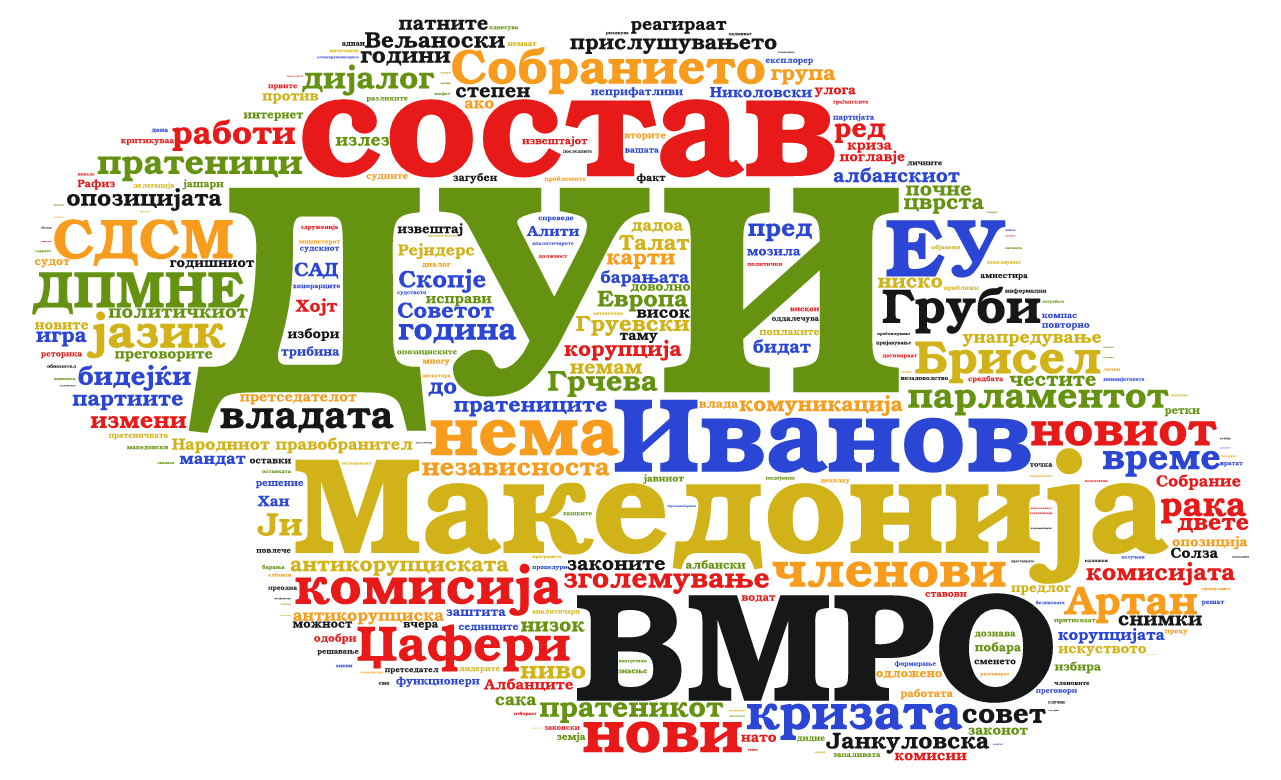
This is the word cloud from the most frequently used words in the newspaper titles and in the announcements of TV reports, referring to the Parliament in April.
The reports from monitoring the debate in the Parliament and the media reporting on the work of the MPs from the previous months can be found on the following link https://idscs.org.mk/mk/tekovni-proekti/sobranieto-pod-lupa.
The research contains published articles and TV reports from the following media: Dnevnik, Utrinski vesnik, Vecher, Sloboden pechat, Koha, Lajm, Sitel, Telma, Alsat-M and MRT2 programme in Albanian language. The monitoring is part of the project “Parliament Watch, Strengthening the Political Debate and the Deliberative Discourse” financially supported by the European Union.